
ChatGPT on Looker: bring analytics self-service to the next level with Dot
Looker users, this is cause for celebration! Dot, the AI chat agent for your data warehouse just released its Looker connection to the LookML (Looker Modeling Layer) semantic layer and it is the perfect combination of coveted self-service flexibility combined with the consistency and structure that Looker customers are all accustomed to.
Data adoption on Looker is limited to trained users
As any data professional using Looker will know, the self service capabilities of the tool are powerful. However, not every stakeholder will receive a builder license with flexibility to explore all data freely on Looker, and some might not receive a license at all. Usually organizations will chose to enable a selected group of stakeholders, maybe called citizen analysts or data champions, to train on Looker and the data model and work side by side with the data team to create dashboards and answers questions for teams. This sounds great in theory and works to a certain size, but in reality often leads to silos in data knowledge and access, and leaves some stakeholders, or entire teams, behind.
Dashboards and fixed reports can only go so far to rectify this, and its clear that oftentimes they answer a set of predefined questions very well, but fail to allow consumers to get to the bottom of what they really want to know. And, if we're really honest, not all questions require a dashboard; it's usually enough to get a quick answer to those onetime queries and move on. Unfortunately, nowadays, it's usually a person spending valuable time doing the answering — either the resident champion, or a data person whose time would be better spent elsewhere.
Dot on Looker enables trusted insights using natural language
With Dot, everyone can further their knowledge and explore the data in a way that is accessible and fast, in natural language, and data teams can be sure that the results are correct and consistent with all the work they have already put into their Looker instance (see what is a semantic layer and Looker semantic layer).
Chat experience on top of Looker semantic layer
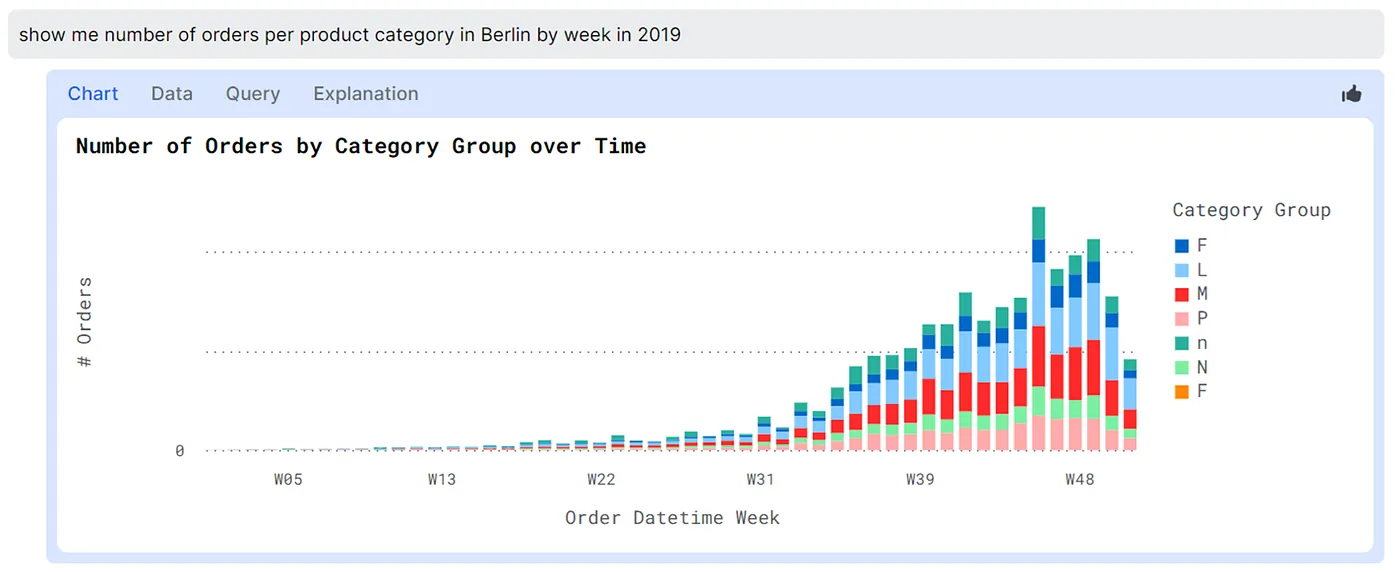
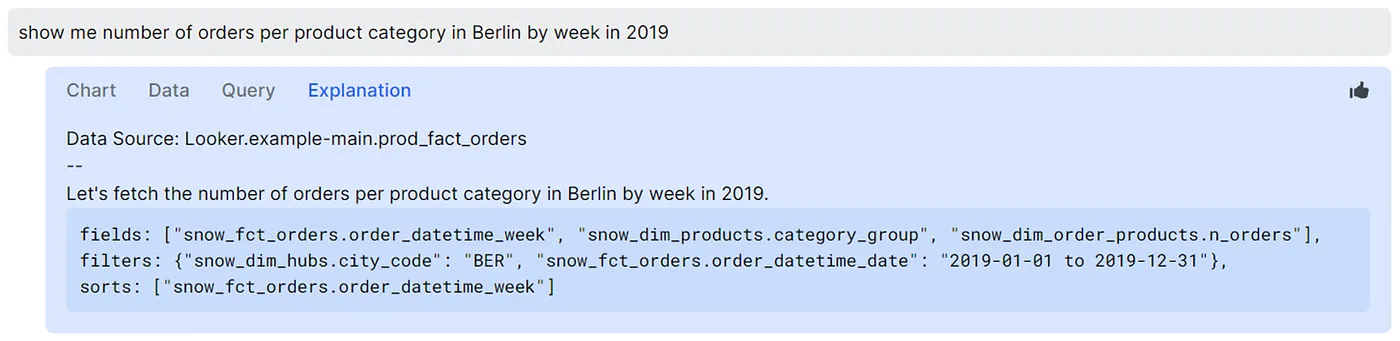
Not only does this solution improve data accessibility and reach, but it gives time back to the data team to work on the problems that only they can solve, like improving the data model and aligning on KPI definitions, documenting data and doing deep dives and cross-functional analyses that add real value to the organization.
By using the Looker API with OpenAIs newest chat GPT4 model, Dot leverages all the work data teams put in to define business KPIs, tables and explores in Looker to make sure that the results shown in the chat are consistent with dashboards stakeholders are used to interacting with. Everything from the field names to the descriptions are immediately available after connection and charts and tables are displayed in a similar fashion to within Looker to create a seamless experience with almost no set up effort.
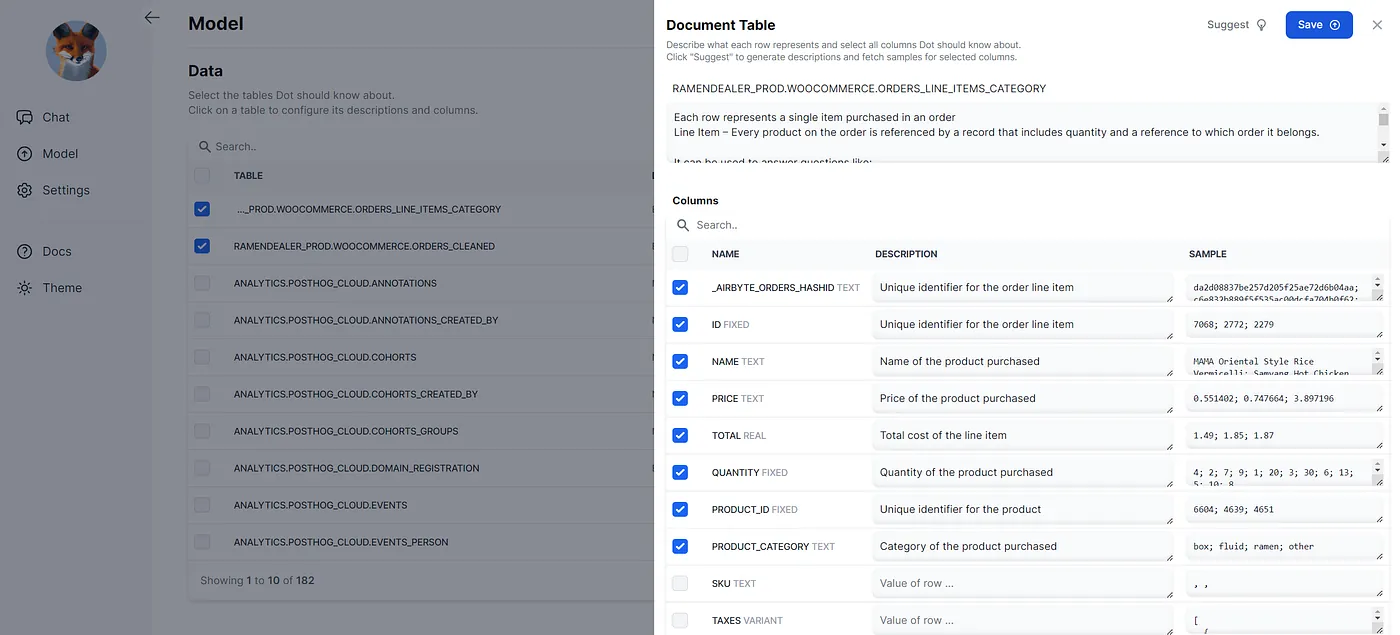
Dot training space integrates documentation of Looker explores, metrics, fields to improve chat accuracy
Conclusion
Implementing Dot integrated to Looker is an elegant way to solve the two critical challenges of true analytics self-service. On one side, easy adoption: Dot enables anyone to answer their data questions via a conversational interface regardless of the technical skills. On the other side, trust: integrating to LookML, Dot ensures that any questions points towards a single source of truth with consistent metric definitions.
Related reading:
If you are curious to test Dot, you can register for free at getdot.ai.
Theo Tortorici
Theo writes about AI-powered analytics, data tools, and the future of business intelligence at Dot.