
Self-service is dead, long live self-service!
The Challenges of Self-Service Analytics Adoption
Data self-service has been a buzzword in the data industry for quite some time now. The promises of self-service analytics include enabling non-technical stakeholders to find their own insights from data, creating a culture of data-driven decision-making within organizations, and improving overall business performance. However, despite the hype and investment in self-service analytics tools, many organizations struggle to achieve widespread adoption and utilization of these tools, which could result in a low return on investment and a perception that self-service analytics has failed to deliver on its promises.
Reasons for the Failure of Self-Service Analytics
Self-service analytics fails for three main reasons:
Many organizations lack the skills and data culture necessary to adopt these tools.
Self-service analytics can create silos of data and analysis that lack consistency, accuracy, and quality control, leading to conflicting insights, data errors, and poor decision-making.
As organizations adopt multiple self-service analytics tools, they may encounter issues with integration, interoperability, and complexity, resulting in data and analytics sprawl, duplication of efforts, and difficulty in scaling or standardizing analytics practices.
Facilitating Data Self-Service through Clear and Useful Data Products
To facilitate data self-service, organizations need to build clear and useful data products and teach non-technical stakeholders how to use them. Currently, the process for non-technical stakeholders to answer their data questions involves defining the question, identifying relevant data sources, finding a technical resource, analyzing the data, reviewing and interpreting the results, drawing conclusions, and communicating the results to relevant stakeholders. This process can be time-consuming and often requires a significant amount of technical expertise.
Large Language Models: A New Opportunity for Data Adoption
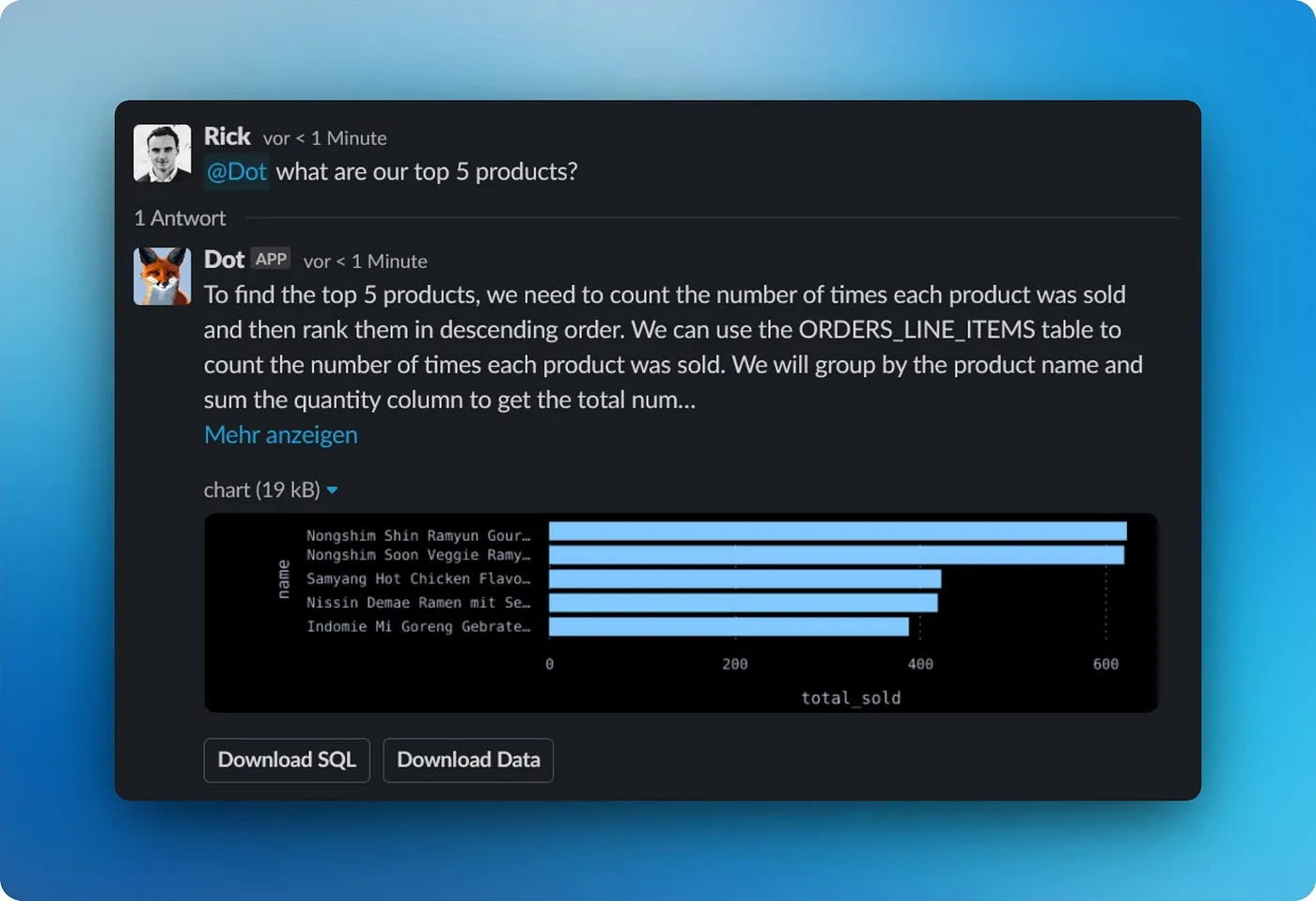
However, the rise of large language models, such as chatGPT, provides new opportunities for easier data adoption inside organizations. With chatGPT, non-technical stakeholders can ask questions in natural language and receive immediate responses, eliminating the need for technical expertise (e.g Dot). This can greatly improve data adoption and utilization in organizations, as it reduces the bottlenecks associated with traditional self-service analytics tools.
Leveraging Large Language Models for Improved Data Utilization and Performance
While data self-service has faced challenges in the past, the rise of large language models like chatGPT provides new opportunities for organizations to improve their data adoption and utilization. By leveraging these new tools, organizations can create a culture of data-driven decision-making and improve their overall performance.
Related reading:
If you are curious to test Dot, you can register for free at getdot.ai.
Theo Tortorici
Theo writes about AI-powered analytics, data tools, and the future of business intelligence at Dot.